
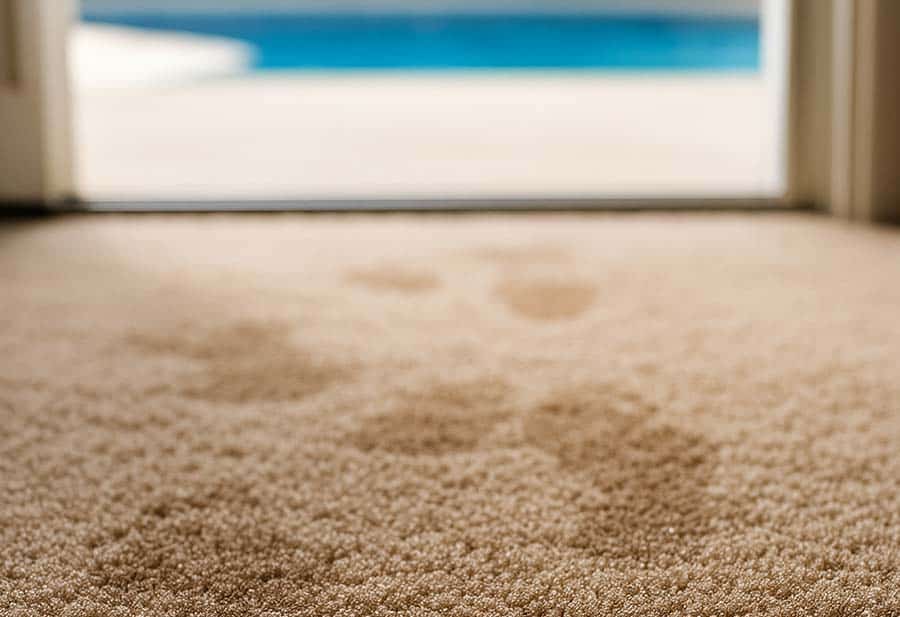
There’s nothing quite like a splash from the backyard pool, until it ends up soaking your carpet.
One cannonball or kids running back and forth from the house to the water, and suddenly your house smells like chlorine (never mind the slipping hazard!).
Unfortunately, this can lead to long-term, unwanted issues if left unaddressed.
The good news is that the fix isn’t complicated! Trust me, I’ve figured this one out from my own experience.
Here’s how to stop the chaos before it soaks in.
Use Waterproof Carpet Protectors
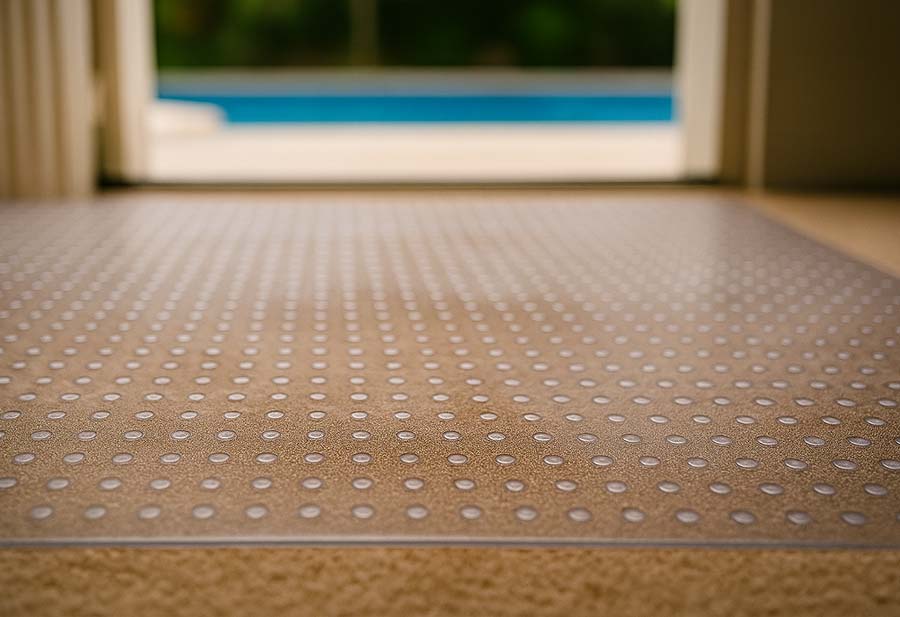
When choosing a waterproof carpet protector, the material makes all the difference.
Materials such as vinyl or TPU are excellent choices for this purpose.
They are durable enough to withstand changing weather conditions, chlorine exposure, and everyday wear and tear.
They are easy maintenance picks, too. Just give them a quick wipe with a damp cloth now and then to keep them in top shape.
Before buying, check a few online reviews to see how well the product holds up over time and across different seasons.
You should select something that strikes a good balance between quality and cost.
Investing in a high-quality protector will save you money on repairs and replacements in the long run.
Ensure that you measure your carpet correctly so the protector fits snugly without loose edges or awkward folds.
It’s also worth considering thickness and texture, since these elements impact both protection levels and comfort underfoot.
Install Outdoor Rugs
Add a few outdoor rugs near the pool, and you’ve got yourself a defense system that does far more than stop soggy footprints from ruining your carpets.
They’re the first to catch flying water from cannonballs and splashy games, keeping your floors dry and far less slippery.
These rugs don’t just sit there looking pretty. They absorb moisture, reducing the frequency of deep-cleaning carpets and preventing water damage.
The right thickness and texture make a real difference, providing a bit of comfort underfoot while ensuring every last splash is absorbed.
Go for ones with decent thickness and texture so they feel comfy underfoot while doing the hard work.
Lastly, place them where people naturally walk from the pool to indoors, and you’ve got an easy fix that keeps the carpets in better shape.
Choosing the Right Materials
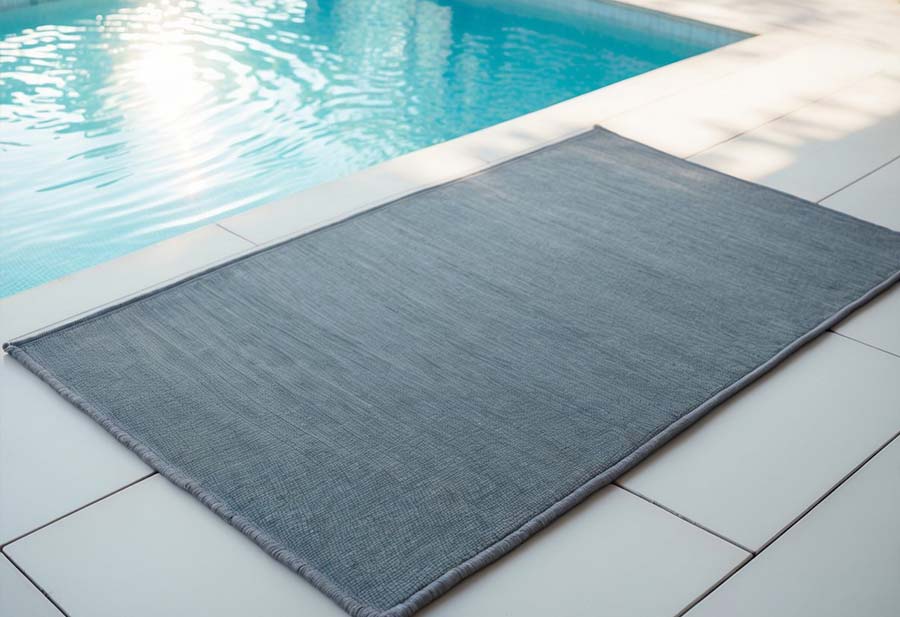
Polypropylene outdoor rugs deserve a medal when it comes to withstanding exposure to pool water and chemicals.
It’s tough, low-maintenance, and doesn’t fall apart in damp spots, unlike some materials.
Mold and mildew struggle to take hold, which is essential for areas that are constantly exposed to wet conditions.
Chlorine, sunscreen spills, general mess, polypropylene can handle it all, and the fibers hold their ground even when soaked in pool water day after day.
Cleaning it is easy, too. Just hose it off, shake out any debris, and let it dry.
It also resists sun damage and rough weather, so you won’t need to replace it every other season.
If you want something that lasts and does the job, polypropylene is your best choice.
Other options, such as polyester and olefin, can also work, although they don’t quite match polypropylene in terms of toughness.
Polyester feels softer underfoot and has a nice look, but it’s not as chlorine-resistant.
Olefin holds up well against stains and moisture, but it’s more prone to fading in direct sunlight.
Ultimately, choose what suits your space, your cleaning habits, and the level of wear and tear your rugs are likely to experience.
Matching Design and Functionality
A rug isn’t just a rug when it’s part of your poolside setup. Its design actually matters.
Choose one that does the job but also ties the place together, rather than something that stands out for all the wrong reasons.
Geometric patterns, leafy designs, something bold or subtle. There’s no shortage of choice, so lean into whatever matches your taste.
Think about how the colors and patterns fit in with what you’ve already got going on outside, instead of treating it like a standalone bit of fluff.
Busy designs work wonders in hiding dirt and smudges.
Darker shades, in particular, do a better job of masking water spots than pale ones.
Choose well, and you’re not just covering up the ground. You’re giving the whole outdoor setup a proper dose of charm and function in one go.
Maintenance Tips
Keeping these rugs in good shape is simple if you get ahead of the mess.
A quick shake or a hose-down removes most of the dirt before it has a chance to settle in.
When the pool sees heavy action, make it a habit to give the rugs a once-over every week to stop chlorine and mystery gunk from building up.
For tougher spots, a mild detergent and a gentle scrub usually do the job.
Use a soft-bristled brush for deeper cleans. It does the job and won’t damage the fibers.
Stick to a routine, and those rugs will last longer and keep the area looking sharp.
Once a year, I recommend calling in the professionals to perform a thorough deep clean, especially if your main carpets have seen their fair share of poolside action as well.
Regularly Clean and Maintain Carpets
Indoor carpets need their fair share of attention when there’s a pool involved because chlorine and damp footprints have a sneaky way of leaving their mark.
Contacting a good carpet cleaner in your area is a great idea, as they’ll do a lot of the heavy lifting, pulling out chlorine residue and moisture before they sink too deep.
Regular vacuuming also keeps everything in check and slows down the wear and tear that naturally shows up in high-traffic areas.
Twice a week during pool season is a good benchmark, more if your place sees a constant parade of wet feet.
Even with all that regular care, the deeper clean can’t be ignored. It’s what keeps carpets from slowly turning into a science experiment.
Steam cleaning clears out the grime you can’t see and takes care of any chemical leftovers that vacuuming missed.
On the other hand, hot water extraction does this especially well, and it’s hands down one of the best ways to eliminate chlorine buildup.
Stay consistent with this whole routine, and your carpets reward you by sticking around longer, smelling better, and staying in decent shape.
A little effort now can save you from bigger problems later, and I promise you’ll be glad you stayed on top of it.