

Having water easily accessible in your backyard is an extremely convenient feature. So, when things go wrong with your faucet, it makes a lot of your routines more difficult.
Figuring out what outdoor faucet repair approach you need can also prove challenging depending on the symptoms.
What to do?
Simply understand the symptoms and possible causes, then either make your repair or replace with something better from one of the many outdoor faucet types available.
Below you’ll learn about outdoor faucets in general and then the most common and tried and true fixes to get everything working again.
Why You Need Your Outdoor Faucet
An outdoor faucet in your home’s backyard or garden is an extremely convenient feature.
The best part is you just plain have fewer hoses running around your yard.
Even better, outdoor faucets keep you from having to run back and forth to your house to get or use water.
Outdoor faucets come in many shapes, sizes and provide a variety of uses.
What most people don’t know is that they can be relatively easy to install (and repair if you have one that is not working or is leaking).
Even a do-it-yourself plumber can install an outdoor water faucet without much trouble or expense.
The biggest considerations usually have to do with the location and whether or not precautions need to be taken to avoid your feeder pipes or actual spigot from freezing.
Let’s take a look below at the types of outdoor faucets, their installations and common problems and how to fix them.

Outdoor Faucet Types and Uses
Think about these uses for outdoor faucets:
Filling up a watering can, spraying off garden vegetables on the vine, filling a pool, or rinsing off after a dirty yard project, washing down walkways or yard equipment–the list goes on and on!
There are more uses on this topic than you ever thought possible. And each could be used from one of the standard hose bibs types.
We should be noted that outdoor plumbing related to irrigation such as in-ground sprinklers, drip systems and the like will not be covered in this article. The focus here will be the following outdoor water supply applications:
Spigot on Your House:
Most homes new and old usually have at least one outdoor faucet attached to their structure. This is called a sillcock or spigot.
Tied to your home’s indoor plumbing, these outdoor faucets offer not only basic convenience but mere necessity when it comes to tasks like watering your lawn with a manual sprinkler.
You’ve probably used these “hose bibs” around your own home for things like washing the car, spraying down a patio or sidewalk, or watering plants and vegetation around the exterior of your home.
Yard Hydrant:
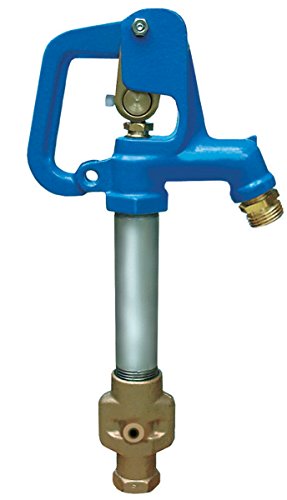
If you have a larger yard, it’s possible someone (maybe even you!) installed an outdoor faucet near your garden or a far corner of your yard.
Strategically placed, yard hydrants do nothing more than shorten the distance you have to go to get water.
Probably the best advantage of one of these guys is not having to run hoses all the way from your house to say your flower or vegetable garden.
The best yard hydrant is one with plenty of lead pipe to bury (to ward against freezer in cold winter areas) and that comes up out of the ground high enough for added convenience.
These models usually come with a level you can pull up and push down. This makes turning off and on much easier than turning knobs. Those are difficult to turn when stuck. With a larger lever, you can definitely get more force if it’s resisting opening up.
Outdoor Kitchen/BBQ:
Okay, this type of outdoor faucet is glorified. It usually comes with a fancier faucet assembly (i.e. handle, lever, knob), and often with a mounted sink.
Gaining in popularity over recent years, installing an outdoor faucet near your grill or outdoor cooking area is extremely handy.
Of course, you need to provision for proper draining and hot water if necessary, but this is a real backyard warrior’s must-have.
Outdoor Shower:
This particular incarnation of an outdoor faucet takes convenience to a whole new level.
Whether the kids need to rinse off after playing in the yard or swimming in the pool, an outdoor shower head can easily be installed at virtually any outdoor faucet. Just don’t forget the towel rack!
Pool Fill Valve:
Instead of filling or topping off your pool with a hose, why not install a faucet or valve on an existing faucet and run it to your pool?
Again, as with all the other types of outdoor faucets, this one adds major convenience.
Outdoor Misters:
In hot and dry climates, a mister (just using nozzles like this one) can help tremendously in keeping you cool. Hooking one up to any outdoor faucet can provide endless relief.
These are best used in the shade, out of direct sunlight.
Repairing Outdoor Faucets
Like any kind of faucet around your home, a spigot or hydrant is no exception when it comes to breaking down on the job.
The most common problems with outdoor faucets are leaking or cracking due to freezing pipes or spouts.
Faucet parts are generally inexpensive, such as a replacement handle or knob. A new sillcock itself is under $5.00.
Fixing a leaky outdoor faucet
The most common thing you can do to repair an outside faucet that’s dripping water is to try tightening the packing nut located just below the handle. Use a wrench to turn this clock-wise and see if any dripping goes away.
If adjusting the packing nut doesn’t help, you unscrew this nut and check inside your faucet to make a repair. Look for a small black washer in there. It may be old and deteriorated and flattened out too much to do its job anymore. Simply buy a replacement at a hardware or plumbing store and you should be back in business.
Another option is to reduce the water pressure going to your faucet. Either install a valve on the supply line to regulate the pressure or an actual pressure regulator to reduce the amount of water your faucet’s valve is having to hold back.
When you have a leaky outdoor spigot that doesn’t respond to the above repair tactics, it’s usually best to replace it. Again, they are usually cheap and only require a little bit of work to put in a new one.
The hardest part may be loosening the old spigot. Be sure you’re using a sturdy wrench that fits well on the spigot’s fitting.
You’re literally going to rotate it off (turning to the left). When you put the new one on, be sure to coat the threads with plumber’s grease or wrap with joint tape.
Always turn off the main water shut-off valve to your home, then turn on the water to drain what’s left in the pipes before removing the faucet.
Stuck faucet?
To remove a stuck outdoor faucet try this. Get a good grip using a channel lock (tongue-and-groove) pliers. Use good pressure, but not too much. The packing around the valve stem could have become dried, and forcing it could cause it to crack.
Simply lubricate all around the valve stem, next to the nut. Wait a few minutes, then loosen the nut slightly, then re-tighten it.
Wait some more for the packing to absorb the oil, then try turning the valve handle. Repeat as necessary.
Low water pressure?
If your outdoor faucet has little or no water pressure, it may have a blockage somewhere in the line.
It’s best to have a professional plumber try to clear the pipes, as you may have hard water deposits such as lime or calcium. Chemicals alone cannot clear these deposits.
Faucet frozen shut?
If you have a freezing outdoor faucet, there are a couple of repair options.
A cheap and easy one is to take an old plastic butter container; one that is big enough to fit around the faucet assembly.
Cut out a hole in the container’s lid and place over the faucet, and up against the wall of your house (if applicable).
Screw or tack it to the siding. Now, wrap your outdoor faucet with fiberglass pipe insulation, securing it with duct tape.
Place the container over the faucet and secure to the lid, which is affixed to the siding.
For this, you can also purchase outdoor faucet covers, such as these. They are waterproof and work well to preserve your faucet from freezing.
In extreme conditions, with regular freezing, it’s best to install a frost-proof outdoor faucet, like this one.
As with anything, sometimes the best kind of outdoor faucet repair is just replacement with a new one. Starting over can definitely be a good thing.
